 Sundarbans / Guided Journeys
Haliday Wildlife Sanctuary & Haliday Island Sundarbans
5.95 km²
Notified sanctuary area (1976)
Haliday Island at a glance
Location: Matla estuary, South 24 Parganas
Experience: Boat-based viewing; no landing
Established: Notification dated 24 June 1976
Forest closure: Every Tuesday
Preferred season: October to March
Haliday Island Wildlife Sanctuary in the Sundarbans
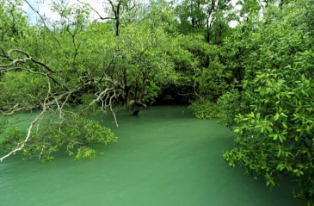
Haliday Wildlife Sanctuary, commonly called Haliday Island, is a small protected island in the southern Sundarbans, close to the Bay of Bengal. Official records also use the spelling Halliday Island Wildlife Sanctuary; Holiday Island is another spelling often used by travellers. Together with Sajnekhali and Lothian Island, it is one of the historically recognised wildlife sanctuaries in the Sundarbans Biosphere Reserve.
The island lies in the lower Matla estuary, a meeting place of riverine and coastal environments influenced by the Matla and Bidyadhari river system. A Haliday Island Sundarbans journey offers a view of this remote tidal landscape from the water, rather than a walking visit to the protected island.
History & Notified Area of Haliday Wildlife Sanctuary
The West Bengal Government declared Halliday Island Wildlife Sanctuary under notification No. 5388 dated 24 June 1976, with a notified area of 5.95 square kilometres in the then Namkhana Range.
The notified area is a legal protected-area figure, not a measurement of the present exposed land. Haliday Island Wildlife Sanctuary has experienced serious coastal erosion over time. The original photographs on this page record earlier visits and should not be interpreted as current views.
Mangroves & Wildlife of Haliday Island

Historical descriptions of Haliday Island wildlife include spotted deer, wild boar, barking deer, rhesus macaques, birds and invertebrates. Mangroves form the characteristic vegetation; earlier afforestation efforts also included Casuarina and Karanja.
The Wildlife Institute of India management evaluation for 2018–19 describes the ecological transition between coastal forest and mangrove habitat, with records of fishing cats, estuarine crocodiles, dolphins and occasional tiger visits. These are historical ecological records, not guaranteed present-day observations.
Haliday Island wildlife is best understood within the wider estuarine ecosystem. Watch for birds and aquatic life from the boat, use binoculars and avoid approaching wildlife. Do not expect a tiger sighting or assume that all historically recorded animals still occur on the remaining island.
Coastal Erosion & Conservation of Haliday Island
The island’s exposure to cyclones, tides and waves has caused significant loss of land. The Wildlife Institute’s evaluation documented erosion and a lack of permanent facilities, while reporting in May 2025 described further severe shrinkage and sparse vegetation. No precise present-day land area is asserted here.
On 14 May 2025 the Ministry of Environment, Forest and Climate Change issued the final Eco-Sensitive Zone notification, S.O. 2136(E), for Halliday Island Wildlife Sanctuary. The protected area and its surroundings illustrate why responsible boat travel and conservation of the Sundarbans delta matter.
How to Reach Haliday Island in the Sundarbans
Haliday Wildlife Sanctuary is accessible only on permitted waterways by a suitable hired boat or launch. Namkhana and Ramganga are common approaches; Jharkhali and Canning are other possible starting areas. Sonakhali, Godkhali and Kaikhali may also be used depending on the authorised itinerary. Arrange your boat in advance rather than relying on an on-demand rental at the jetty.
From Kolkata, earlier itineraries allowed approximately 3–4 hours by road to Namkhana, Ramganga or Jharkhali, depending on the exact starting point. Kolkata to Jharkhali generally takes approximately 3–3½ hours by road. Godkhali to Jharkhali takes approximately 1½–2 hours by boat.
For the remaining southern leg, earlier India Beacons journeys estimated Jharkhali to Haliday Wildlife Sanctuary at 3½–4 hours by boat and Sajnekhali to Haliday Island at around 8½ hours. These historical sailing times require reconfirmation for the current route, vessel, weather and tides. See our Sundarbans boat rental options.
Haliday Island Sundarbans Tour — Kalash, Bonnie & Bhagabatpur
A Haliday Island Sundarbans itinerary is often combined with Kalash Camp, boat-based views of Kalash Island and Bonnie Camp. A customised tour starting from Namkhana may also include the Bhagabatpur Crocodile Project and waterways around Lothian Island Wildlife Sanctuary, subject to confirmed access.
Allow a minimum of two to three days depending on your starting point and route. A 3-night, 4-day tour is preferable for the wider southern forest circuit. Overnight accommodation is not available at Kalash Camp. Landing on Kalash Island beach is prohibited.
Visitor Information, Permits & Best Time to Visit
Landing on Haliday Island is prohibited. Visitors must remain aboard the authorised boat. Earlier routes used the Jharkhali Range Office or Kaikhali Forest Office for forest entry arrangements and recognised guides; confirm the currently applicable office, route, permissions and charges before travel. The Sundarbans forest is closed to tourists every Tuesday.
October to March is generally the preferred season for a Haliday Island Sundarbans cruise. The broad tidal rivers can be rough, especially during the April–September period. Travel only when conditions and official permissions allow, in a suitable licensed vessel. Bad-weather warnings or restrictions take precedence over planned sightseeing.
For an enquiry about Haliday Wildlife Sanctuary and the southern Sundarbans, call India Beacons Sojourn on +91 9903295920 or +91 8585007393. We can discuss a customised boat tour, subject to current forest access and suitable weather.
Frequently Asked Questions about Haliday Island Wildlife Sanctuary
Where is Haliday Wildlife Sanctuary?
Haliday Wildlife Sanctuary is in the South 24 Parganas Forest Division of West Bengal, in the lower Matla estuary near the Bay of Bengal.
Are Haliday Island and Holiday Island the same place?
Yes. Haliday Island Wildlife Sanctuary is also spelled Halliday Island in government notifications and sometimes Holiday Island Wildlife Sanctuary in travel searches.
When was Haliday Island Wildlife Sanctuary established?
The West Bengal Forest Department notification No. 5388 is dated 24 June 1976.
What is the area of Haliday Wildlife Sanctuary?
The notified sanctuary area is 5.95 square kilometres. Coastal erosion has reduced the physical land area; the statutory area should not be mistaken for the present dry land extent.
Can tourists land on Haliday Island?
No. Tourists are not allowed to disembark on Haliday Island. View it from an authorised boat on a permitted route.
What wildlife is associated with Haliday Island Wildlife Sanctuary?
Historical records describe spotted deer, wild boar, barking deer, rhesus macaques, birds and other estuarine fauna. The island has undergone substantial erosion; these records are not a promise of present-day sightings.
Are Royal Bengal Tigers found at Haliday Island?
Tigers have occasionally visited the sanctuary in the past. Do not plan a Haliday Wildlife Sanctuary tour expecting a tiger sighting.
How can I reach Haliday Island in the Sundarbans?
Arrange a suitable boat through Namkhana, Ramganga or Jharkhali, or another permitted starting point. The island cannot be reached by road.
How far is Haliday Wildlife Sanctuary from Jharkhali?
Earlier India Beacons itineraries allowed about 3½–4 hours by boat from Jharkhali. Reconfirm the current route and sailing time before departure.
How far is Haliday Island from Sajnekhali?
Our earlier route information indicates approximately 8½ hours by boat. This is an indicative historical journey time, subject to confirmation, the vessel, tides, weather and permissions.
Can I visit Haliday Wildlife Sanctuary from Godkhali?
Godkhali to Jharkhali normally takes about 1½–2 hours by boat. From Jharkhali, allow further sailing time on the authorised southern route; forest permission arrangements must be confirmed.
Which is the best time to visit Haliday Island Sundarbans?
October to March is generally preferable. Exposed estuarine waters can be rough at any time; avoid departures in unsafe weather and follow official warnings.
Is Haliday Wildlife Sanctuary open on Tuesdays?
The Sundarbans forest is closed to tourists every Tuesday. Confirm the permitted boat route and current visitor arrangements before departure.
Can I combine Haliday Island with Kalash and Bonnie Camp?
Yes, subject to current forest permissions. A southern circuit may include Kalash Camp, views of Kalash Island, Bonnie Camp and, from the Namkhana side, Bhagabatpur and Lothian Island.
How many days are required for a Haliday Island tour?
Allow at least two to three days depending on the starting jetty and the other destinations. A three-night, four-day customised southern circuit is preferable when appropriate.