 Sundarbans / Guided Journeys
Dobanki Canopy Walk & Watchtower
≈400 m
Approximate length of the Dobanki Canopy Walk, as stated by the Sundarban Tiger Reserve.
Dobanki at a glance
Location: Southern part of Sajnekhali Wildlife Sanctuary, within the Sundarban Tiger Reserve.
Boat approach: About two hours from Sajnekhali by boat.
Entry: Booked, registered boat with an ecotourism guide on board.
Suggested season: October to March; confirm current conditions and permissions before travelling.
Dobanki Watchtower & Canopy Walk
The Dobanki Watchtower and Canopy Walk are well-known visitor experiences in the Sundarban Tiger Reserve. The elevated pathway lets visitors experience the mangrove habitat from above, while the watchtower provides a wider view across the forest. A tiger sighting is never guaranteed; visitors should come to appreciate the landscape and biodiversity.
Dobanki lies in the southern part of Sajnekhali Wildlife Sanctuary. The Forest Department describes the canopy walk as approximately 400 metres long and the boat journey from Sajnekhali as about two hours. The boat cruise is itself part of the experience, with rivers, creeks and mangrove scenery along the route.
The Elevated Mangrove Canopy Walk
The Dobanki Canopy Walk is an elevated pathway of approximately 400 metres through natural mangrove habitat. It offers visitors a different perspective of the forest and culminates at a watchtower from which a broad expanse of mangroves can be seen.
Protective side fencing and netting are described along the visitor walkway. Because site facilities and access arrangements may change, follow the current instructions displayed at Dobanki and the guidance of your ecotourism guide.
Walk only along the designated visitor pathway. Please maintain silence, avoid disturbing wildlife and follow all Forest Department instructions.
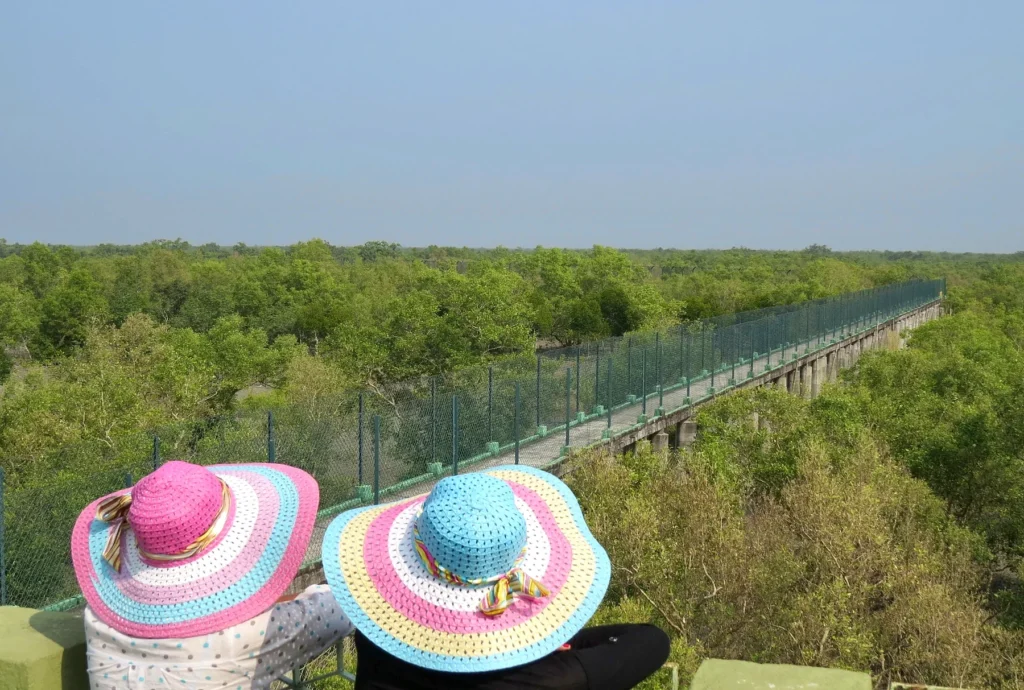
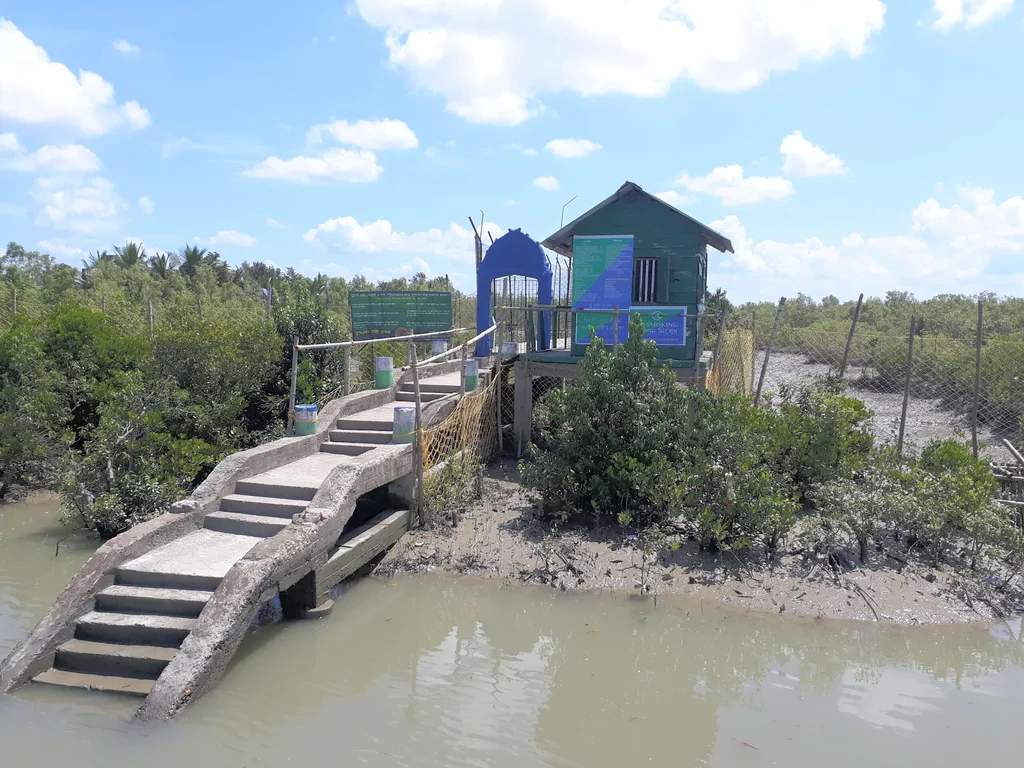
Dobanki Watchtower & Forest Habitat
The Sundarban Tiger Reserve’s Tiger Conservation Plan identifies two sweet-water ponds in the Dobanki beat: the Dobanki Camp-side pond and Deulbharani Pond. The plan explains that wildlife ponds are dug to provide freshwater for wild animals and can also serve as wildlife-monitoring points. These ponds are part of the forest habitat, not a promise of animal sightings. The camp area also has a Bonbibi temple; access to individual facilities may vary under current Forest Department arrangements. Read the Sundarban Tiger Reserve Tiger Conservation Plan.
The wider Dobanki landscape may offer opportunities to observe Chital (spotted deer), otters, monitor lizards, wild boar and birdlife such as storks, jungle fowl, eagles and falcons. Whistling ducks may be seen around freshwater ponds in winter. These are possible observations only; wildlife remains free-ranging and sightings are never guaranteed.
Forest staff residential and administrative areas are not visitor facilities. Remain on designated visitor paths and enter only places open under current Forest Department permissions.
No tiger or other animal sighting can be promised. Dobanki should be visited to appreciate the mangrove forest, its natural water bodies and its biodiversity rather than to expect a particular species.
Location, How to Reach & Best Time to Visit Dobanki
Location: Dobanki is in the southern part of Sajnekhali Wildlife Sanctuary, within the Sundarban Tiger Reserve in South 24 Parganas, West Bengal. It is reached by water; there is no direct road journey to the canopy walk or watchtower.
Boat journey: The official Sundarban Tiger Reserve ecotourism information gives an approximate boat journey of two hours from Sajnekhali to Dobanki. Actual travel time can vary with the route, tides, weather and operating conditions.
Boarding and entry arrangements: Entry into the reserve is permitted only on booked, registered boats, with an ecotourism guide on board. Depending on the itinerary, boat arrangements may begin from Canning, Sonakhali, Godkhali or Jharkhali. The Forest Department’s current visitor guidance identifies Godkhali and Dhamakhali as designated boarding points, as instructed by the tour operator. Confirm your exact boarding point, reporting time, route and entry arrangements with your operator before departure.
Best time to visit: October to March is generally recommended for a Sundarbans visit. Weather, tides, water levels and temporary Forest Department instructions can affect travel and access at other times, so check current conditions before setting out.
For current information, consult the Sundarban Tiger Reserve ecotourism information and its How to Reach guidance.
Plan Your Dobanki Visit
Before travelling, confirm your registered boat, ecotourism guide, entry permissions, permitted route, boarding point and reporting time with your tour operator. These arrangements can change with Forest Department instructions, tides and weather conditions.
For visitors who want to include Dobanki and nearby creeks, a 2-night/3-day Sundarbans itinerary can be a practical starting point. A 3-night/4-day trip gives more flexibility for longer routes and additional stops. These are planning suggestions, not Forest Department requirements; the best plan depends on permitted routes, tides, boat arrangements and your interests.
You can also read about Sajnekhali Watchtower and the Mangrove Interpretation Centre, explore the Sudhanyakhali Watchtower, arrange Sundarbans boat rental, or learn about the India Beacons Sojourn team and its Tripadvisor recognition.
Wildlife sightings, including Royal Bengal Tiger sightings, are never guaranteed. Please follow all instructions at the visitor site and help protect the mangrove environment.
Frequently Asked Questions about Dobanki Watchtower & Canopy Walk
Where is Dobanki Watchtower?
Dobanki Watchtower and the Canopy Walk are part of Dobanki Camp, located on an island in the Sundarban Tiger Reserve, in the southern part of Sajnekhali Wildlife Sanctuary. The site can be reached only by boat or launch.
How can one reach Dobanki?
Dobanki can be reached only by boat or launch. Entry into the Sundarban Tiger Reserve is permitted on booked, registered boats, with an ecotourism guide on board. Arrange your boat and itinerary in advance and follow the boarding and entry instructions given by your tour operator.
Where are the boat starting points for visiting Dobanki Watchtower?
Depending on the itinerary and boat arrangement, journeys may begin from Canning, Sonakhali, Godkhali or Jharkhali. The Forest Department’s current visitor guidance identifies Godkhali and Dhamakhali as designated boarding points, as directed by the tour operator. Confirm the exact boarding point and reporting time before departure.
Can I go directly to Dobanki?
Dobanki is accessible only by water and through the reserve’s permitted routes. Visitors must have the required entry arrangements and travel on a booked, registered boat with an ecotourism guide on board. Confirm the approved route and reporting point with your tour operator.
Where can you hire a boat in advance to visit Dobanki?
Arrange a registered boat or launch in advance through a tour operator or boat owner. You can contact IBS through our Sundarbans Boat Rental page to discuss boat arrangements for your itinerary.
How far is Dobanki from Godkhali?
Travel time from Godkhali depends on the boat, permitted route, tide, weather and any stops along the way. The Forest Department’s approximate two-hour journey is from Sajnekhali to Dobanki, not from Godkhali. Ask your operator for the current estimate for your complete route.
How far is Dobanki from Jharkhali?
Some itineraries may arrange a boat journey from Jharkhali. The time to reach Dobanki depends on the approved route, boat, tide and operating conditions. Confirm the route and expected journey time with your tour operator before booking.
Will I see the Royal Bengal Tiger if I visit Dobanki?
No tiger sighting can be guaranteed. The Royal Bengal Tiger lives freely in its natural habitat, and wildlife observations depend on natural conditions. Dobanki should be visited to appreciate the mangrove forest and its biodiversity.
How many days are required to visit Dobanki?
If you want to include Dobanki along with nearby creeks and other watchtowers, a 2-night/3-day Sundarbans itinerary can be a practical starting point. A 3-night/4-day trip gives more flexibility for longer routes and additional stops. These are planning suggestions, not Forest Department requirements; the best fit depends on permitted routes, tides, boat arrangements and your interests.
Which is the best time to visit Dobanki Watchtower?
October to March is generally recommended for visiting the Sundarbans. Travel at other times may be possible, but weather, tides, water levels, boat suitability and temporary Forest Department instructions can affect access. Confirm current conditions before departure.
How long is the Dobanki Canopy Walk?
The Sundarban Tiger Reserve describes the Dobanki Canopy Walk as approximately 400 metres long. It is an elevated pathway through the mangrove habitat and leads to a watchtower. Follow the current visitor instructions and remain on the designated route.
How long does the boat journey from Sajnekhali to Dobanki take?
The Forest Department gives an approximate journey of two hours by boat from Sajnekhali to Dobanki. Actual travel time can vary with the boat, route, tide, weather and operating conditions.